The Rise of Alligra: Redefining Geometric Display Typography in Modern Design
In the rapidly evolving landscape of digital and print design, typography has long served as the silent ambassador of brand identity. It is not merely about legibility; it is about setting a tone, evoking an emotion, and establishing a visual hierarchy that guides the user’s eye. Among the myriad of typefaces available to designers today, Alligra has emerged as a significant player, offering a distinct blend of modern geometric precision and artistic flair. Designed to make creations look out of this world, this font is gaining traction among professionals, creators, and entrepreneurs who seek to elevate their visual storytelling.
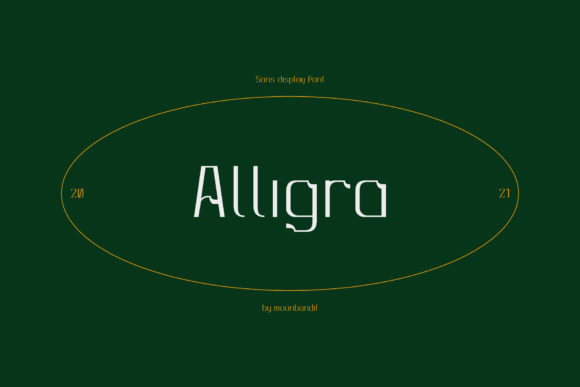
Alligra is a modern geometric display font, expertly crafted to bridge the gap between structural rigidity and organic elegance. Unlike traditional sans-serif fonts that often feel utilitarian or cold, Alligra introduces a nuanced character set that feels both futuristic and approachable. Its sharp angles are softened by subtle curves, creating a visual rhythm that captures attention without overwhelming the viewer. This balance makes it particularly effective for headlines, branding materials, and large-format displays where impact is paramount.
Understanding the Geometry of Appeal
To understand why Alligra is resonating with contemporary audiences, one must first appreciate the nuances of geometric typography. Geometric fonts are built upon basic geometric shapes—circles, squares, and triangles. While early iterations of this style were often rigid and monochromatic in feel, modern interpretations like Alligra have evolved to include humanist touches. These touches prevent the text from feeling too mechanical, adding warmth and personality to the design.
Alligra exemplifies this evolution. The font’s construction relies on clean lines and uniform stroke widths, characteristic of the geometric style, but it incorporates slight variations in counter-space and terminal shapes that give it a unique voice. For instance, the letter 'A' might feature a perfectly triangular apex, while the 'O' retains a circular integrity but with a flattened bottom, grounding the letter in reality. These small details contribute to a sophisticated aesthetic that appeals to high-end brands and creative agencies alike.
The versatility of Alligra allows it to fit seamlessly into various design contexts. Whether used in a minimalist web interface, a bold poster campaign, or a luxury product packaging, the font maintains its integrity. It does not compete with other design elements; instead, it enhances them, providing a strong foundation upon which other visual components can be built. This capability is crucial for marketers and designers who need to maintain brand consistency across multiple platforms while still capturing the fleeting attention of consumers.
Alligra in the Context of Current Design Trends
The design industry is currently experiencing a shift towards "digital-first" aesthetics, where clarity, speed, and emotional connection are prioritized. Consumers are bombarded with information daily, and they have developed a short attention span for visual content. In this environment, typography must do more than just convey words; it must act as a hook. Alligra addresses this need by offering a display font that is instantly recognizable and memorable.
One of the key trends influencing the adoption of fonts like Alligra is the move towards maximalism in digital spaces. As websites and apps become more immersive, there is a growing demand for typography that can stand up to vibrant colors, complex layouts, and dynamic animations. Alligra’s bold presence makes it an ideal candidate for hero sections, call-to-action buttons, and editorial headers. Its ability to command attention ensures that key messages are not lost in the noise of modern digital environments.
Furthermore, the rise of remote work and the gig economy has led to an increase in personal branding among freelancers and solopreneurs. These individuals often lack the resources for custom logo design but rely heavily on typography to establish their professional identity. Alligra provides an accessible yet premium solution for these users. By incorporating this font into their portfolios, invoices, and social media graphics, freelancers can project an image of competence and creativity without investing in bespoke type design.
The Intersection of Technology and Creativity
Technological advancements in rendering engines and screen resolutions have also played a role in the popularity of geometric display fonts. High-DPI screens and variable font technology allow for sharper, more precise rendering of intricate typographic details. Alligra takes advantage of these capabilities, ensuring that its geometric forms remain crisp and clear even at small sizes or when scaled up for large displays. This technical compatibility is essential for responsive web design, where a single font file must perform optimally across desktops, tablets, and smartphones.
Moreover, the integration of AI-driven design tools has made it easier for non-designers to experiment with advanced typography. Platforms that offer pre-set font pairings and automated layout suggestions often include Alligra as a recommended option due to its broad appeal and ease of use. This democratization of design empowers entrepreneurs and marketers to create visually stunning content without needing extensive training in graphic design principles.
Practical Applications Across Industries
The adaptability of Alligra means it can be effectively utilized across a wide range of industries. Here are some practical examples of how different sectors are leveraging this font to enhance their communication:
- Tech Startups: Companies in the software and hardware space often use Alligra to convey innovation and precision. The font’s clean lines mirror the sleek design of modern gadgets and interfaces, reinforcing the brand’s association with cutting-edge technology.
- Fashion and Lifestyle Brands: For brands aiming to project sophistication and trendiness, Alligra offers a stylish alternative to traditional serif fonts. Its modern edge aligns well with contemporary fashion photography and editorial layouts, helping brands stay relevant in a fast-paced market.
- Event Marketing: Concerts, conferences, and product launches require promotional materials that generate excitement. Alligra’s dynamic structure adds energy to posters and digital ads, making events feel exclusive and must-attend experiences.
- E-commerce: Online retailers use Alligra for product titles and sale banners. The font’s high legibility ensures that customers can quickly identify products and offers, reducing friction in the shopping journey and potentially increasing conversion rates.
In each of these scenarios, the choice of Alligra is not arbitrary. It is a strategic decision based on the font’s ability to communicate specific values such as reliability, innovation, and style. By aligning the typographic choice with brand objectives, businesses can create a cohesive narrative that resonates with their target audience.
Why Professionals Are Paying Attention
The growing attention paid to Alligra is indicative of a broader shift in how designers and marketers view the role of typography. It is no longer seen as a secondary element but as a primary driver of user experience. Professionals are paying attention because Alligra represents a convergence of form and function. It is aesthetically pleasing, technically robust, and commercially viable.
Additionally, the font’s flexibility supports diverse creative workflows. Whether a designer is working in Adobe Creative Cloud, Figma, or Canva, Alligra integrates smoothly into the process. This ease of integration reduces production time and allows for rapid iteration, which is crucial in agile marketing environments where speed to market is a competitive advantage.
There is also a psychological component to its appeal. Studies in visual perception suggest that humans are naturally drawn to balanced and symmetrical forms. Alligra’s geometric symmetry triggers a sense of order and harmony, which can subconsciously influence consumer behavior by fostering trust and comfort. In an era where skepticism towards advertising is high, creating a subconscious sense of reliability through design is a powerful tool.
Looking Ahead: The Future of Display Typography
As we look to the future, the importance of distinctive typography will only grow. With the advent of augmented reality (AR) and virtual reality (VR), spatial typography will become increasingly important. Fonts like Alligra, with their clear structures and adaptable forms, are well-positioned to thrive in these new mediums. Their ability to maintain readability and impact in three-dimensional space makes them valuable assets for immersive design projects.
Furthermore, as sustainability becomes a core value for many brands, the efficiency of digital fonts aligns with eco-friendly practices. Digital typography requires less physical resource consumption compared to printed materials, and using versatile fonts like Alligra reduces the need for excessive printing experiments during the design phase. This alignment with sustainable values adds another layer of relevance to the font’s adoption.
In conclusion, Alligra is more than just a font; it is a reflection of current design sensibilities and technological capabilities. Its modern geometric aesthetic, combined with its practical versatility, makes it an invaluable tool for professionals seeking to create impactful visual communications. As the design industry continues to evolve, Alligra stands as a testament to the power of thoughtful typography in shaping how we perceive and interact with the world around us. For those looking to make their creations look out of this world, Alligra offers a gateway to elevated design excellence.